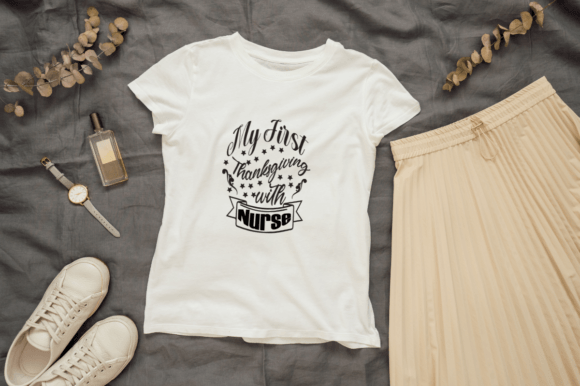
My First Thanksgiving with Nurse-Svg
A Designer’s First Stitch Test—Does This Hold Up on Real Fabric?
I pulled up My First Thanksgiving with Nurse-Svg last week while prepping a small-batch holiday collection for a local boutique—think embroidered sweatshirts, baby onesies, and linen tea towels. Right away, the design landed with warmth: soft curves, gentle proportions, and that quiet sincerity you want in a “first” milestone piece. It’s not loud or cartoonish—it leans into tenderness, with subtle nurse iconography woven into a Thanksgiving motif (think a stethoscope looped like a wreath, or a turkey silhouette holding a tiny heart). As a machine embroidery design, its strength isn’t in complexity but in clarity—clean lines, open negative space, and intentional breathing room between elements.
Where It Shines: Sweatshirts, Onesies, and Thoughtful Gifting
My First Thanksgiving with Nurse-Svg feels tailor-made for products where emotional resonance matters more than flash. I stitched it onto a midweight cotton-blend sweatshirt first—medium-density fill stitch, tear-away stabilizer—and the result was crisp without stiffness. The lettering stayed legible at 3.5 inches wide, and the central motif held shape even across the slight stretch of the fabric. On a newborn onesie? Even better. The design scales down gracefully; no detail vanished, no stitches bunched. That’s critical for baby embroidery—parents notice every wobble in a satin stitch.
It also translated beautifully to a linen tea towel using a mix of running stitch outlines and light fill areas—ideal for holiday kitchen decor or boutique-branded hostess gifts. As a tote bag design? Yes—but only when placed front-and-center on natural canvas or sturdy cotton duck. The composition has enough visual weight to anchor the space without overwhelming it.
Where to Pause—Texture, Scale, and Surface Reality
This isn’t a one-size-fits-all embroidery file. On highly textured fabrics like terry cloth or bouclé, the finer interior details (like the subtle leaf veins or script-style “First” text) risk getting lost. Likewise, on thin or slippery fabrics—say, a lightweight rayon tee—the design benefits from cut-away stabilizer and slightly reduced stitch density to prevent puckering.
Caps and curved surfaces are trickier. The layout assumes a relatively flat embroidery field, so if you’re planning a cap front placement, test the center alignment carefully—some of the balance relies on symmetrical spacing that shifts on a dome. And while the design works on dark fabric, avoid ultra-dense black thread on black fabric unless you add an underlay stitch or switch to a matte white thread for contrast. Always check your thread colors against the background in both natural and artificial light.
Stitch Density & Detail Integrity
The fill areas feel thoughtfully calibrated—not overly dense, which helps with drape and wash durability. That’s a win for custom apparel and personalized gifts meant to last beyond one season. But don’t skip the test stitch: run it on scrap fabric matching your final product’s weight and stretch. Watch how the corners settle, whether the satin-stitched edges roll cleanly, and how the smallest loops hold up after trimming. If you’re planning an embroidered patch, confirm the outer border is tight enough to withstand heat-sealing or iron-on backing.
Commercial Use & Brand Fit: What This Design Communicates
As a craft business owner or Etsy seller, My First Thanksgiving with Nurse-Svg reads as intentional—not generic. It quietly signals care, vocation, and celebration all at once. That makes it strong for healthcare-themed boutiques, NICU support shops, or pediatric practices offering branded merchandise. It doesn’t scream “nurse”—it whispers gratitude, presence, and new beginnings. That nuance builds trust. Customers scrolling through handmade product listings respond to authenticity, not clip-art energy.
For printable mockups or digital product previews, this design holds up well in grayscale—it doesn’t rely on color to convey meaning. That’s smart design economy. Still, always preview it on both light and dark fabric backgrounds before listing. A design that sings on ivory may mute on charcoal unless thread contrast is dialed in.
Practical Notes Every Embroidery Designer Should Run Through
- Test first—on fabric identical to your finished product, with the same stabilizer and thread.
- Check hoop size compatibility—the layout suggests a 4x4 or larger hoop, but verify before hooping production runs.
- Inspect small details—especially the script text and fine linework—under magnification if needed.
- Confirm licensing—since this is marketed as a Graphics file usable on mugs, pillows, wall art, and more, double-check usage rights for commercial embroidery and physical resale.
- Compare mockups—run side-by-side black-and-white and full-color versions to assess visual hierarchy.
- Review stitch density—if your machine struggles with tight fills, consider simplifying minor interior shapes before scaling down.
Final Thought: A Quiet Anchor for Meaningful Makes
My First Thanksgiving with Nurse-Svg won’t dominate a festival booth or trend on TikTok—but it will land softly, sincerely, and memorably on the chest of a new parent wearing a holiday sweatshirt, on the corner of a nurse’s favorite apron, or stitched into the hem of a baby’s first Thanksgiving blanket. It’s a T-Shirt Designs asset that thinks beyond the tee. It supports storytelling, honors quiet service, and fits naturally into real-life embroidery projects—no forced themes, no over-engineered flair. Just clean, considered, human-centered design. That’s rare. And worth stitching right.